
Musk Says 200+ Neoclouds Face 'Guppy-Level Death'
Musk Says 200+ Neoclouds Face 'Guppy-Level Death'
SpaceX says it closed $40 billion in debt to buy AI chips. Musk's message to the 200-plus companies renting out GPU power: the money tap just shut off.
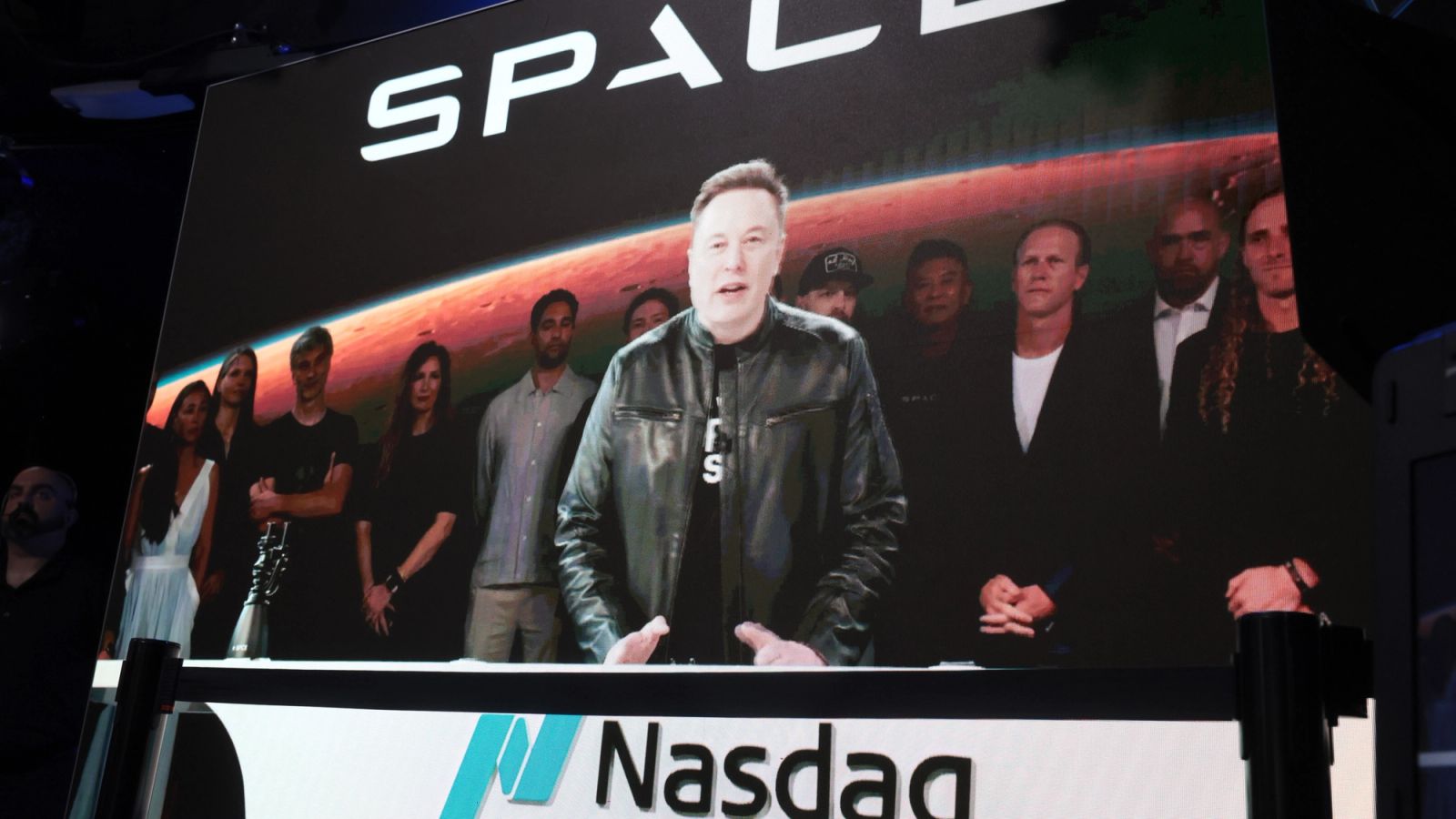
Elon Musk announced on Sunday that SpaceX has closed $40 billion in debt to buy AI chips — and used the moment to warn that most of the 200-plus companies renting out that same computing power are about to hit a wall. "As of the past few weeks, debt markets have almost entirely shut off access to money for any company that doesn't have substantial revenue independent of AI data centers," he wrote on X. "That means the 200+ neoclouds are going to see guppy-level death and consolidation. Some will make it through, but not many."
Wait, what's a neocloud?
A neocloud is a specialist cloud company that rents out AI computing power, usually from data centers packed with GPUs — graphics processing units, the chips that train and run AI models. Think of them as landlords for AI: instead of buying their own chips, startups and labs rent time on someone else's.
The biggest names are CoreWeave and Nebius, plus dozens of smaller firms and former Bitcoin miners like IREN that pivoted into AI hosting. Their whole business is one bet: that demand for rented AI compute keeps growing fast enough to pay off the enormous loans they took to buy chips.
The deal itself is messier than the tweet
Musk said "SpaceX closed $40B of debt for GPUs," mostly callable debt — debt SpaceX can repay early — for chips arriving in the first half of 2027. But people familiar with the talks told Bloomberg the deal hadn't actually priced as of late Sunday night in New York, with pricing discussions still ongoing.
The debt is reportedly being structured as private bonds issued by an off-balance-sheet entity, with Goldman Sachs leading talks and Apollo Global Management among the investors. SpaceX hasn't issued a news release or filing confirming the deal, and didn't respond to requests for comment. So treat "closed" as Musk's word, not a done deal — yet.
Why SpaceX could borrow when others can't
SpaceX's pitch is that it's not really a neocloud at all. It's rated investment-grade by all three major credit graders, and it has real revenue outside AI: Starlink satellite internet and rocket launches.
Its AI unit is now its biggest business — $7.6 billion in third-quarter revenue, up 830% from a year earlier and more than half of the company's $14.6 billion in quarterly sales, driven by cloud deals, its Cursor acquisition, and Grok adoption. Even so, SpaceX isn't immune: the cost of insuring its debt jumped last week to a record 266 basis points, a level more typical of a junk-rated borrower, and the price of its existing debt has tumbled.
Why lenders are suddenly nervous
Gartner forecast in October that more than 80% of neocloud providers will stop operating independently by 2030. The math behind it is stark: AI providers are expected to spend nearly $1 trillion on infrastructure in 2026 and another $6 trillion between 2027 and 2030, but Gartner says there isn't enough revenue to deliver profitable returns on all of it.
Spending on AI-optimized cloud infrastructure is forecast to grow from $66 billion in 2027 to $174 billion in 2030 — but most providers may struggle to earn back their investment before the current generation of chips is replaced. Venture capitalist Chamath Palihapitiya made a similar point earlier: many neoclouds look poorly funded and badly run, and delays in building data centers could leave chips and half-finished projects sitting idle in 2027.
The market already voted
Shares of CoreWeave fell more than 2% in premarket trading on Monday, and IREN fell 2%. Nebius, by contrast, was narrowly higher — it announced a $3.5 billion financing facility backed by Citigroup just last week, which its COO called proof it can "choose when and how we raise capital."
Analyst Dan Ives framed the bigger race: 800 to 1,000 new US data centers over the next few years, a "Game of Thrones battle" for compute. Musk, for his part, ruled out playing rescuer: "SpaceX is not buying any neoclouds. Pointless."
What this means if you build with AI
If you rent GPUs — or your employer does — your provider's balance sheet just became part of your infrastructure risk. Consolidation usually means fewer choices and more pricing power for the survivors, which could push rental prices up even as hardware gets cheaper.
The winners, in Musk's telling and Gartner's numbers, are companies with revenue beyond AI: the hyperscalers, and SpaceX itself. The losers are single-bet firms that borrowed billions against a demand curve that has to stay steep forever.
Musk is talking his own book here — SpaceX is itself building a neocloud business, and every rival that fails is one less bidder for chips and customers. But the lender data points the same way he does: Gartner's 80% figure, SpaceX's own spiking insurance costs, and a $40 billion deal that still hadn't priced when Musk declared it closed. Watch whether the deal actually prices this week — that, more than any tweet, will tell you whether the money tap is open or shut.
Sources: CoinDesk, Cointelegraph, Bloomberg via Moneyweb.
