Post-Money SAFE Explained: $500K at a $5M Cap Is 10%
On a post-money SAFE, the ownership you sell is the check divided by the cap. SAFEs stack, so you can sell a fifth of the company before your priced round starts.
Saksham Dogra 7 min read
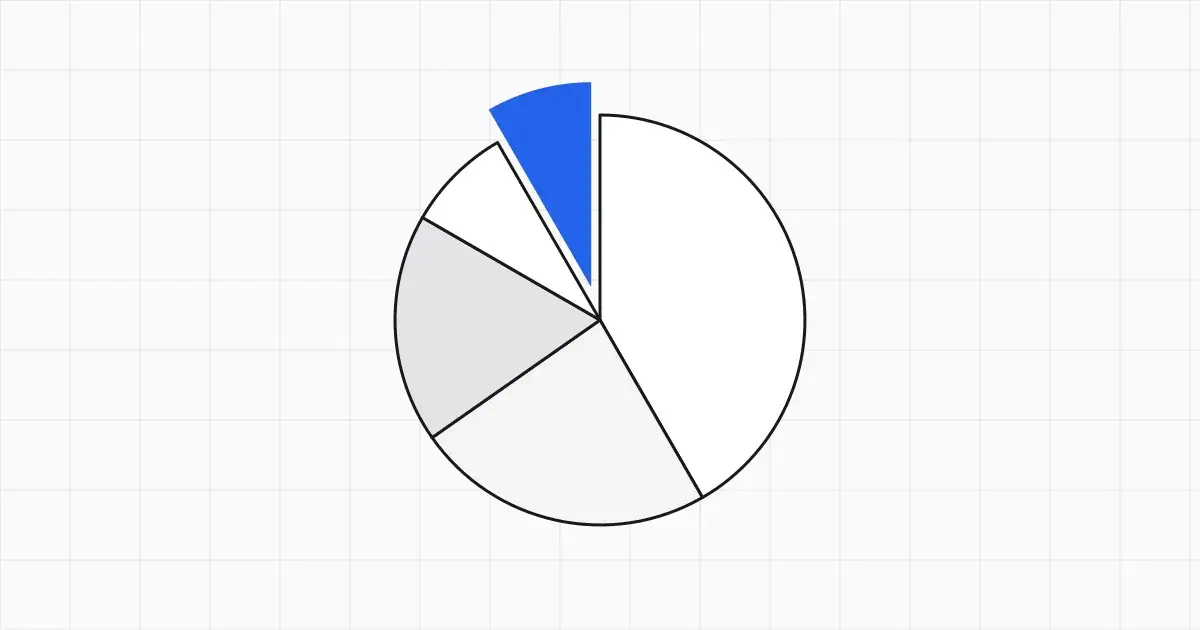
A post-money SAFE converts automatically into preferred stock when you raise a priced round, and the ownership it buys is simply the investment divided by the post-money valuation cap. $500K on a $5M cap is 10% of the company just before the priced round. SAFEs don’t dilute each other, but the priced round’s new money and new option pool dilute founders and SAFE holders alike.
Below: the mechanics from YC’s own documents, a full worked example with two SAFEs and a Series A, and how MFN, discounts and pro rata side letters change the picture. Checked 28 Oct 2026 against YC’s SAFE page and the Post-Money SAFE User Guide.
This is general information, not legal or tax advice. YC itself says to consult a lawyer licensed where your company was formed before using any SAFE form.
The three YC SAFE forms
YC publishes three post-money SAFE versions for US companies, plus an optional pro rata side letter, all free (YC):
| Form | How it converts | Ownership known at signing? | Use it when | Avoid it when |
|---|---|---|---|---|
| Valuation cap, no discount | At the cap, or the round price if lower | Yes: investment / cap | Default for most raises | You can’t agree on a cap yet |
| Discount, no cap | At a discount to the round price (YC: commonly 10-20%) | No, set at the round | Bridge close to a priced round | You expect a big step-up in valuation |
| MFN, no cap, no discount | Takes terms of a later SAFE if the investor chooses | No | An early friendly check before you set terms | You’ve already set a cap (just use it) |
YC removed the combined “cap and discount” form in 2021, saying founders consistently chose one or the other. For an uncapped SAFE, YC says to use the discount form with the “Discount Rate” set to 100%.
Post-money mechanics in plain English
Three rules from YC’s guide do most of the work:
- The cap is “post” all SAFE money. It includes every SAFE you raise, so SAFEs don’t dilute each other. It is not post the priced round’s new money.
- The cap is post the existing option pool, including outstanding options, promised options and the unissued pool. It is not post a new or increased pool created in the priced round.
- Conversion price = cap / company capitalization. Company capitalization counts all shares, the existing pool and all converting SAFEs, but excludes the new money and the pool increase. The SAFE holder gets the better of this “SAFE price” or the round’s price per share.
There is also a hard ceiling: raising the full cap would sell 100% of the company. YC’s guide shows $2.5M on a $5M cap sells 50%. Decide your total raise before you start.
Worked example: two SAFEs, then a Series A
Starting cap table (fully diluted): founders 8,000,000 shares, issued options 1,000,000, unissued pool 1,000,000. Total 10,000,000. Founders own 80%.
Step 1: one SAFE
Investor A puts in $500,000 on a $5,000,000 post-money cap.
- Ownership = $500,000 / $5,000,000 = 10%.
- Everyone else is diluted by 10%: founders go from 80% to 80% x 0.90 = 72%.
Step 2: a second SAFE
Investor B puts in $1,000,000 on a $10,000,000 cap.
- Ownership = $1,000,000 / $10,000,000 = 10%.
- Investor A stays at 10%. Post-money SAFEs are additive.
- Total sold on SAFEs = 20%. Founders = 80% x (1 − 0.20) = 64%.
That’s the whole SAFE-stage dilution. The founders and the option pool absorbed it.
Step 3: the Series A converts both SAFEs
The company raises $4,000,000 at a $16,000,000 pre-money ($20,000,000 post). The term sheet requires a 10% unissued option pool after the round, included in the pre-money (the usual setup in YC’s examples).
Company capitalization for the SAFEs = existing 10,000,000 shares grossed up for the 20% of SAFEs:
- 10,000,000 / (1 − 0.20) = 12,500,000
- Investor A shares = 12,500,000 x 10% = 1,250,000
- Investor B shares = 12,500,000 x 10% = 1,250,000
- SAFE price A = $5,000,000 / 12,500,000 = $0.40; SAFE price B = $10,000,000 / 12,500,000 = $0.80
Pool increase and new money. New investors own $4M / $20M = 20% of the post-round total (T). The pool after the round must be 10% of T:
- 0.80T = 12,500,000 + pool increase, and 1,000,000 + pool increase = 0.10T
- So 0.70T = 11,500,000, T = 16,428,571, pool increase = 642,857, new investor shares = 3,285,714
- Series A price = $16,000,000 / (12,500,000 + 642,857) = $1.2174 per share
Both SAFE prices ($0.40 and $0.80) are below $1.2174, so both convert at their caps.
| Holder | Before SAFEs | After SAFEs | After Series A |
|---|---|---|---|
| Founders | 80.0% | 64.0% | 48.7% |
| Investor A ($500K, $5M cap) | 0 | 10.0% | 7.6% |
| Investor B ($1M, $10M cap) | 0 | 10.0% | 7.6% |
| Series A investors ($4M) | 0 | 0 | 20.0% |
| Issued options | 10.0% | 8.0% | 6.1% |
| Unissued pool | 10.0% | 8.0% | 10.0% |
Notice two things. The SAFE holders were diluted from 10% to 7.6% by the new money and the pool increase, exactly as YC’s guide describes. And the 10% post-round pool, sitting inside the pre-money, came mostly out of the founders and SAFE holders, not the new investor.
The SAFE holders receive a separate “shadow” series (Series A-2 and A-3, say) with the same rights as the new Series A preferred but a lower price per share, so their liquidation amount equals what they invested.
Run your own numbers
Don’t rebuild this in a spreadsheet. YC’s free SAFE Conversion Calculator stacks multiple SAFEs with caps, discounts and MFNs, adds an option pool and shows the cap table after a Series A. Use it to sanity-check any term sheet.
When a SAFE gets more than the cap implies
If the priced round’s valuation is not comfortably above a SAFE’s cap, the SAFE converts at the new-money price instead and the holder receives more shares. In YC’s Appendix II, an $8M-cap SAFE ended at 10.3% instead of 10% because the seed round priced at $8.8M pre. If the round prices below the cap, the cap simply doesn’t apply.
Discount SAFEs
On a 20% discount SAFE, the investor converts at 80% of the round price. Using the Series A price above, $1.2174 x 0.80 = $0.9739, so a $250,000 discount SAFE would buy roughly 256,700 shares. (In a real model the extra SAFE also changes the share counts slightly, which the calculator handles.) Because the ownership isn’t fixed until the round, discount SAFEs are harder to plan around than capped ones.
MFN SAFEs
An MFN SAFE has no cap and no discount. If you later issue a SAFE with better terms, the MFN holder can amend to match it, but must take the later SAFE’s terms whole, with no cherry-picking, and usually only once. Side letters with non-economic rights (like information rights) don’t trigger it.
YC’s practical tip: the MFN uses the later of signing or receiving the wire. So close and fund your lower-cap SAFEs before you issue an uncapped MFN, and sign last yourself.
If a priced round happens before the MFN is amended, the holder buys the same preferred stock as the new investors at the same price.
YC’s own standard deal pairs a fixed-7% SAFE with a $375K uncapped MFN SAFE; our YC Winter 2027 guide works through what that costs at different caps.
Pro rata side letter
The post-money SAFE has no pro rata right inside it. YC moved it to an optional standard side letter that applies to the round in which the SAFE converts.
In our example, if Investor B had the side letter, it could buy up to 10% (its as-converted SAFE ownership) of the Series A shares: 10% x 3,285,714 = 328,571 shares, about $400,000 at $1.2174. That $400K comes out of the room available for the lead, or forces a bigger round and more dilution.
YC’s guidance: think about pro rata allocations before you grant them. Common approaches are a minimum check size to qualify, giving it to everyone (deferring the negotiation), or capping total pro rata to a target share of the round. An investor writing $500K has a much better case than one writing $10K.
Who should and shouldn’t use a post-money SAFE
| Situation | Use a post-money SAFE? |
|---|---|
| US C-corp raising a pre-seed or seed from angels and funds | Yes, cap-only form is the default |
| Rolling close with investors signing on different days | Yes, each SAFE closes independently |
| Investor wants board seats, vetoes or detailed rights | No, a priced round fits better |
| You already have many pre-money SAFEs or convertible notes | Usually keep the existing instrument, per YC’s guide |
| You are an LLC | Not as-is; SAFEs convert into preferred stock. See C-corp vs LLC |
| Company formed in Canada | Use YC’s Canadian form with a local lawyer; Send a SAFE only supports US companies |
Practical points from YC: the board must approve the SAFEs, investors should be accredited, a SAFE isn’t binding until the money arrives, and a SAFE has no interest or maturity date. YC also says it can’t give tax advice on how SAFEs are treated, so ask your accountant.
One more reason founders care which entity they raise into: stock in a US C-corp can qualify for the QSBS exclusion if the company meets the IRS tests, including gross assets of $75 million or less for stock issued after 4 July 2025. Our C-corp vs LLC guide covers that, and non-US founders should start with US LLC for non-residents to see why the entity choice matters. More guides in the founder playbooks hub.
Frequently asked questions
How does a post-money SAFE convert?
What percentage does a SAFE give an investor?
Do multiple SAFEs dilute each other?
What is the difference between a pre-money and post-money SAFE?
What is an MFN SAFE?
Do SAFE investors get pro rata rights?
Sources
- 1. The SAFE: forms, terms and FAQ - Y Combinator ycombinator.com
- 2. Post-Money SAFE User Guide (PDF) - Y Combinator bookface-static.ycombinator.com
- 3. SAFE Conversion Calculator - Y Combinator ycombinator.com
- 4. SAFE vs convertible note vs priced round - Y Combinator ycombinator.com
- 5. Instructions for Schedule D (Form 1120-S) (2025), QSB stock tests - IRS irs.gov
Founder, unboxth
Saksham Dogra is the founder of unboxth. He writes founder to founder about building an AI startup from anywhere: company setup, costs, tools and fundraising.