C Corp vs LLC for Startups: Why VCs Want Delaware C-Corps
Self-funded and profitable? An LLC is taxed once and costs less. Raising venture money or granting real equity? Form the Delaware C-corp.
Saksham Dogra 8 min read
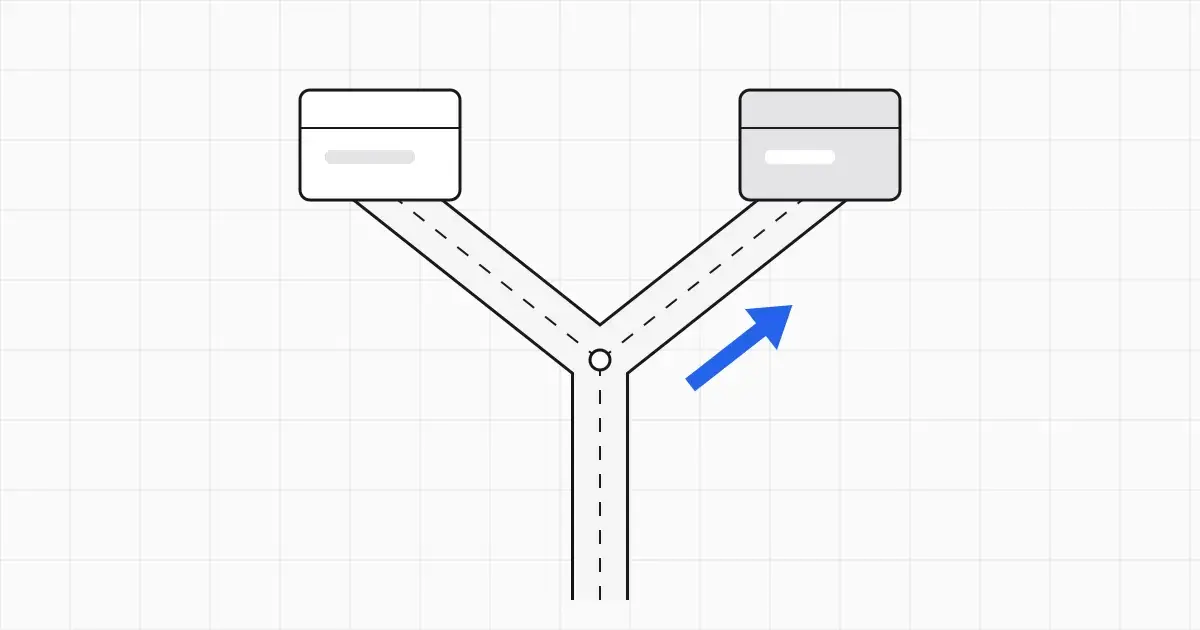
If you plan to raise venture capital, form a Delaware C-corp. If you are building a profitable, self-funded business you will draw cash from, an LLC is usually cheaper and is taxed only once. The trade-off is simple: an LLC avoids the 21% corporate tax layer, while a C-corp gives you preferred stock, option plans and the Section 1202 QSBS exclusion that investors and founders want.
This guide shows the tax math with real numbers, explains why VCs insist on C-corps, covers the 2025 QSBS changes, and walks through converting later. Rules checked 28 Oct 2026 against IRS, Congress and Delaware sources.
This is general information, not tax or legal advice. Confirm with a CPA (US), and a cross-border advisor if you live in Canada or Australia.
The short answer
| If you… | Choose | Why |
|---|---|---|
| Plan to raise from VCs or accelerators | Delaware C-corp | SAFEs and priced rounds issue preferred stock; QSBS needs C-corp stock |
| Want to grant stock options to employees | Delaware C-corp | Standard option plans and 409A valuations assume a corporation |
| Are bootstrapping and taking profits out | LLC | One layer of tax; profits and losses flow to owners |
| Are testing an idea with no revenue yet | Either; LLC is cheaper | You can convert to a C-corp before your first round |
| Are a non-US founder with no US investors | Check home-country rules first | Hybrid and controlled-foreign-entity rules can change the answer |
Pass-through vs double tax
LLC. Per the IRS, a single-member LLC is disregarded by default (its profit is taxed on you) and a multi-member LLC is taxed as a partnership, unless it elects corporate treatment on Form 8832. Either way, the LLC itself pays no federal income tax. Owners pay at their own rates on their share of profit, whether or not cash is distributed.
C-corp. A C-corp is a separate taxpayer. IRS Publication 542 says corporations “figure their tax by multiplying taxable income by 21%.” When the company later pays dividends, owners pay tax again. Qualified dividends are taxed at capital gain rates (Topic 404), which for 2025 are 0%, 15% or 20% depending on taxable income (Topic 409).
Worked example: $200,000 of profit
Assume a single US-resident owner, federal tax only, all profit paid out as a qualified dividend.
| Step | C-corp, 15% dividend bracket | C-corp, 20% dividend bracket |
|---|---|---|
| Profit | $200,000 | $200,000 |
| Corporate tax at 21% | −$42,000 | −$42,000 |
| Left to distribute | $158,000 | $158,000 |
| Dividend tax | −$23,700 (15%) | −$31,600 (20%) |
| Owner keeps | $134,300 | $126,400 |
| Combined federal rate | 32.85% | 36.8% |
With an LLC, the same $200,000 lands on the owner’s return once, at ordinary income rates. Whether that is better depends on your bracket and state, so model it with a CPA.
Two things the table hides:
- Startups rarely pay dividends. If you reinvest everything, the second layer never arrives. A loss-making startup pays no corporate tax at all, and losses can carry forward inside the company.
- LLC losses flow to you. In an LLC, early losses can offset an owner’s other income (subject to limits). In a C-corp they stay trapped in the company.
So “double tax” matters most for profitable companies that distribute cash. For a venture-backed startup aiming at an exit, the bigger tax lever is QSBS.
Why VCs want a C-corp
Investors are not being fussy. The standard venture toolkit assumes a corporation:
- SAFEs convert into preferred stock. YC’s SAFE converts “into preferred stock, which happens automatically when you raise a priced round,” and your board of directors must approve issuing SAFEs. YC’s Send a SAFE tool “currently supports only US-incorporated companies.” See our explainer on how a post-money SAFE converts.
- Classes of stock. Preferred stock with liquidation preferences is how priced rounds work. An LLC can mimic this in its operating agreement, but every investor’s lawyer has to read a custom document.
- No partnership tax on investors. In a multi-member LLC taxed as a partnership, each investor is taxed on its share of profit and receives a Schedule K-1. Holding corporate stock keeps fund investors out of that partnership reporting.
- Option plans. Employee stock options and option pools are built around corporate shares.
- QSBS. Only stock in a domestic C corporation can qualify, which can make the founders’ and investors’ exit gains federally tax-free.
Delaware is the default because investors’ lawyers know its corporate law, not because of a tax break. It costs from $109 to incorporate, then an annual report ($50) and franchise tax by 1 March, with a minimum of $175 (authorized shares method) or $400 (assumed par value method) (fee schedule, franchise tax). A Delaware LLC costs $110 to form and $400 a year, due 1 June. Missing either deadline triggers a $200 penalty plus interest (what happens if you don’t pay). Our Stripe Atlas vs doola vs Firstbase comparison covers formation-service pricing.
QSBS (Section 1202) in 2026
QSBS lets a non-corporate shareholder exclude gain on qualifying C-corp stock. The One Big Beautiful Bill Act (P.L. 119-21, Sec. 70431), signed 4 July 2025, changed the rules for stock acquired after that date. From the current statute:
| Rule | Stock acquired on or before 4 Jul 2025 | Stock acquired after 4 Jul 2025 |
|---|---|---|
| Holding period | More than 5 years | At least 3 years |
| Exclusion | 100% (for stock acquired after 27 Sep 2010) | 50% at 3 years, 75% at 4, 100% at 5+ |
| Per-company cap | Greater of $10M or 10x basis | Greater of $15M (indexed for inflation for tax years after 2026) or 10x basis |
| Company gross assets at issue | $50M or less | $75M or less (indexed after 2026) |
Other tests that still apply (IRS, §1202):
- Stock must be acquired at original issue, for money, property (not stock) or services.
- At least 80% of assets (by value) must be used in a qualified trade or business during substantially all of your holding period.
- Excluded fields include health, law, engineering, architecture, accounting, consulting, financial services, and any business whose principal asset is the reputation or skill of its employees. Banking, farming, hotels and restaurants are also out.
- The taxable part of a 1202 gain is taxed at a maximum 28% rate (Topic 409).
Worked example: a $20 million exit
A founder buys 1,000,000 shares for $10,000 in January 2026 and sells after 5 years for $20,010,000, a $20,000,000 gain.
- Cap = greater of $15,000,000 or 10 x $10,000 = $15,000,000.
- Excluded gain: $15,000,000. Taxable gain: $5,000,000.
- At the 20% top capital gain rate, federal tax is about $1,000,000 instead of about $4,000,000 on the full gain (ignoring the net investment income tax and state tax).
Sold after only 3 years, the exclusion would be 50% of eligible gain, still capped, and the taxable part faces the 28% maximum. Holding to year 5 is worth planning for.
Converting an LLC to a C-corp later
Starting as an LLC is fine. Delaware’s § 265 lets “any other entity,” including an LLC, convert to a Delaware corporation by filing a certificate of conversion and a certificate of incorporation at the same time. LLCs formed in other states can usually convert or merge into a new Delaware corporation; your lawyer picks the route.
What changes for tax:
- QSBS clock starts at conversion. Under §1202(i)(1), stock received for property is treated as acquired on the exchange date, with basis no lower than the property’s fair market value. Value built while you were an LLC goes into basis and is not excluded; only growth after conversion can be.
- Timing. Convert before your first priced round or before issuing SAFEs, so investors buy C-corp stock from day one.
- Paperwork. You need a new board, bylaws, stock issuance, a new IRS entity classification and fresh state filings. Budget legal fees.
Canadian and Australian founders
A Delaware C-corp is the entity US investors know, and it is often the cleanest US structure for non-residents. But check the home side first:
- Canada. A Canadian-controlled private corporation must be resident in Canada and either incorporated there or resident there since June 1971 (CRA). A Delaware corporation is not a CCPC, so it does not get CCPC-only rates and credits. YC publishes a Canadian version of the SAFE for Canadian companies. Also avoid defaulting to a US LLC: the CRA treats it as a corporation while the IRS does not, which our US LLC for Canadians guide explains.
- Australia. See our guide to a US company for Australian founders. Raise the residence and control questions with an Australian tax advisor before you incorporate.
- QSBS is a US exclusion. It does not bind the CRA or the ATO. If you are tax resident in Canada or Australia when you sell, your home country may tax the gain the US excludes.
Many non-US founders start with a home-country company and “flip” to a Delaware parent when a US investor requires it. That flip has its own tax cost, so plan it with advisors on both sides. YC, for example, invests in US, Canadian, Cayman and Singapore corporations, so an Australian company flips but a Canadian one may not need to; see our YC Winter 2027 guide for Canadian and Australian founders.
Who should and shouldn’t choose each
| Entity | Choose it if | Do NOT choose it if |
|---|---|---|
| Delaware C-corp | You will raise VC or angel money, sell SAFEs, grant options, or want QSBS | You plan to pay out most profits every year and never raise |
| LLC (any state) | You are bootstrapped, profitable, or testing an idea cheaply | You are about to raise, or you are Canadian-resident and haven’t modelled the hybrid issue |
| LLC electing corporate tax | You want LLC governance but corporate tax treatment | You want a standard VC round (investors expect a Delaware corporation issuing stock), or you want QSBS certainty |
If you are going the LLC route as a non-resident, compare Delaware vs Wyoming first. More founder guides live in the founder playbooks hub.
Frequently asked questions
Should a startup be an LLC or a C corp?
Why do VCs want a C corp instead of an LLC?
What is the federal corporate tax rate in 2026?
Can an LLC get QSBS treatment?
How much does a Delaware C corp cost each year?
Can a Canadian or Australian founder form a Delaware C corp?
Sources
- 1. Publication 542, Corporations (21% tax rate) - IRS irs.gov
- 2. 26 U.S.C. § 1202, Partial exclusion for gain from certain small business stock (current through Oct 2026) - Office of the Law Revision Counsel uscode.house.gov
- 3. Instructions for Schedule D (Form 1120-S) (2025), QSB stock tests - IRS irs.gov
- 4. Topic no. 409, Capital gains and losses - IRS irs.gov
- 5. Topic no. 404, Dividends - IRS irs.gov
- 6. H.R.1 (P.L. 119-21), Sec. 70431 Expansion of QSBS gain exclusion - Congress.gov congress.gov
- 7. Limited liability company (LLC) classification - IRS irs.gov
- 8. Delaware Code Title 8, § 265 Conversion of other entities to a domestic corporation delcode.delaware.gov
- 9. Delaware Division of Corporations fee schedule (August 2026) corpfiles.delaware.gov
- 10. Delaware franchise tax - Division of Corporations corp.delaware.gov
- 11. The SAFE - Y Combinator ycombinator.com
- 12. Type of corporation (CCPC definition) - Canada Revenue Agency canada.ca
Founder, unboxth
Saksham Dogra is the founder of unboxth. He writes founder to founder about building an AI startup from anywhere: company setup, costs, tools and fundraising.