Delaware Flip for Australian Startups: The ATO Tax Traps
The flip paperwork is cheap. The costs are Australian: where your board makes decisions, the 20% ESIC offset your angels lose, and how the share swap is taxed.
Saksham Dogra 9 min read
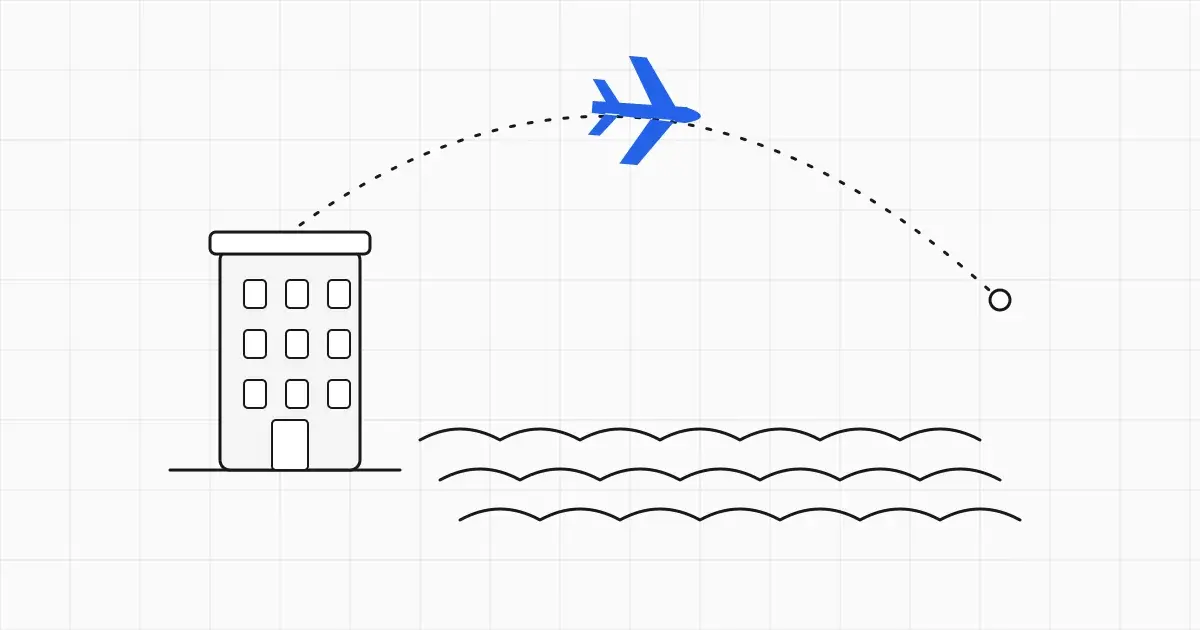
Most Australian founders only need a US company when a US investor asks for one. In that case the usual move is a “Delaware flip”: a new Delaware C-corp becomes the parent and your Australian Pty Ltd becomes its subsidiary. The filing fees are small. The real costs are Australian: board decisions made in Australia can make the Delaware parent an Australian tax resident, your local angels lose the early stage innovation company (ESIC) tax offset, and the share swap needs a capital gains tax plan.
This guide covers when to flip, the ATO rules that matter, a worked example, and a decision table. Rules and fees checked 28 Oct 2026 on ato.gov.au, corp.delaware.gov and irs.gov.
This is general information, not tax or legal advice. Confirm with a US CPA and an Australian registered tax agent or lawyer for your situation.
What a Delaware flip actually is
Before the flip, founders and investors own an Australian Pty Ltd. After it:
- A new Delaware C-corp is incorporated.
- Every shareholder swaps their Australian shares for shares in the Delaware company, in the same proportions.
- The Australian company becomes a 100% subsidiary. It usually keeps the local team, the R&D work and the Australian contracts.
- New US investors put money into the Delaware parent, often on a post-money SAFE or a priced round.
Why a C-corp and not an LLC? US venture funds generally invest in corporations, and the LLC’s pass-through tax is a poor fit for them. We cover that in Delaware C-corp vs LLC for startups.
Do you even need a US company?
| Situation | Flip now? | Why |
|---|---|---|
| A US lead investor has made a Delaware parent a condition of the term sheet | Usually yes | It is a deal term, and doing it before closing is cleaner than after |
| You are joining a US accelerator that requires a US entity | Often yes | Check whether it accepts a US subsidiary instead |
| You sell SaaS to US customers and get paid through Stripe | No | An Australian company can sell into the US; a flip adds cost without new revenue |
| Australian angels are about to invest and want ESIC benefits | Wait | The offset depends on the company they invest in being an ESIC (see below) |
| You “might raise in the US one day” | No | Flip when there is a real investor, not a hypothetical one |
Australian tax residency: the central management and control trap
Incorporating in Delaware does not by itself keep a company out of the Australian tax net. Per the ATO, a company is an Australian resident if it is incorporated in Australia, or if it is not incorporated here but carries on business in Australia and has either its central management and control in Australia, or its voting power controlled by Australian-resident shareholders.
The ATO’s view of central management and control (CMC) is in TR 2018/5, written after the High Court’s Bywater decision. The points that matter for a flipped startup:
- Business activity doesn’t have to be in Australia. “It is not necessary for any part of the actual trading or investment operations of the business of the company to take place in Australia” (para 8). If the company is controlled from here, that control is itself carrying on business here.
- CMC means high-level decisions. It’s “the making of high-level decisions that set the company’s general policies” (para 11), not day-to-day operations.
- Substance beats paperwork. CMC is where decisions are made “as a matter of fact and substance,” not where they are “merely recorded and formalised” (para 30). Minutes saying “meeting held in Delaware” don’t help if everyone dialled in from Melbourne.
- The key factors are where those who exercise CMC actually do so, where the board meets, where dividends are declared, and minutes recording where high-level decisions are made (para 36).
In a typical flip, every director is an Australian founder sitting in Australia. That is the fact pattern where the Delaware parent can end up Australian-resident.
Why dual residency hurts
The US taxes a Delaware corporation as a domestic company. If Australia also treats it as resident, both countries claim it. The Australia-US treaty does not settle this for companies: the US Treasury’s technical explanation says “a dual resident company is treated as a resident of neither Contracting State for purposes of the convention.” In practice that means no treaty tie-breaker and a messy double-tax position.
Practical steps founders commonly discuss with advisors (none of them guarantees an outcome):
- Appoint at least one director who is genuinely based in the US and takes part in real decisions.
- Hold board meetings where the decision-makers actually are, and keep honest minutes.
- Keep the Australian operating company’s decisions with the Australian board, and the parent’s strategic decisions with the parent’s board.
CFC rules: what changes for Australian shareholders
If the Delaware parent is not an Australian resident, Australia’s controlled foreign company (CFC) rules come in. Per the ATO:
- A foreign company is a CFC under the strict control test if five or fewer Australian “1% entities” and their associates hold at least 50%. There’s also an assumed controller test (one Australian entity at 40% or more, unless others control the company) and a de facto control test.
- You are an attributable taxpayer if your associate-inclusive control interest is 10% or more.
- The United States is a “listed country” (ATO Appendix 1). For a CFC resident in a listed country, amounts “taxed at full rates by listed countries are generally exempt from accruals taxation.” The main exceptions are designated concession income (for the US, things like tax-exempt government bond income and regulated investment company income) and tainted income where the CFC fails the active income test.
For an early-stage operating startup with ordinary trading income (often losses), CFC attribution is usually limited. A Delaware parent holding a large passive treasury portfolio is where you’d want a closer look.
What Australian investors and staff can lose
ESIC: the angel offset
Australian angels who buy new shares in a qualifying early stage innovation company can get a tax offset of 20% of the investment. The ATO’s own example: a A$100,000 investment gives a A$20,000 offset (ATO).
To qualify, the company must not be “a foreign company under the Corporations Act 2001,” must have been incorporated in Australia or registered in the Australian Business Register within the last three income years (or incorporated in Australia within six with limited expenses), had expenses of A$1 million or less and assessable income of A$200,000 or less in the previous income year, and must be unlisted. A Delaware parent is incorporated outside Australia, so new shares issued by the parent generally won’t qualify. ESIC status is tested immediately after the shares are issued, so an angel who invested in the Pty Ltd before the flip keeps the incentive they already qualified for.
ESS: the start-up concession for employee options
Under the start-up concession, the discount on qualifying employee shares or options isn’t taxed under the ESS rules, and gains fall into CGT instead. The ATO lists these conditions:
- No company in the group is listed on a stock exchange.
- Every company in the corporate group was incorporated less than 10 years ago.
- Aggregated annual turnover doesn’t exceed A$50 million.
- “The employing company must be an Australian resident company.”
- Employees hold the interests for at least 3 years.
- Shares are issued at no more than a 15% discount; options have an exercise price at least equal to market value.
The residency condition is on the employing company. Staff employed by the Australian subsidiary may still qualify for options over Delaware parent shares, provided the group meets the other tests. A US option plan also has its own US tax rules, so the plan usually needs an Australian sub-plan or addendum.
Capital gains tax on the share swap
Swapping Pty Ltd shares for Delaware shares is a disposal for CGT. The ATO says scrip for scrip rollover “is only available if the exchange is in consequence of an arrangement that results in the acquiring entity… becoming the owner of 80% or more of the original company,” with participation on substantially the same terms for all voting shareholders. The rollover lets you disregard the gain and carry your old cost base into the new shares.
Two warnings:
- The ATO notes “special rules if a company or trust has a small number of shareholders or beneficiaries and there is a significant or common stakeholder.” A founder-heavy startup often fits that description.
- Rollover covers only the replacement shares. Any cash in the deal is taxed.
Whether rollover applies to your flip is fact-specific; ask your advisor to confirm it in writing before you sign.
Worked example: what the angels lose
Kaia and Sam run a Sydney Pty Ltd. Four Australian angels have each agreed to put in A$50,000 (A$200,000 total). A US fund wants a Delaware parent before its seed round.
| Scenario | Company issuing new shares | ESIC-eligible? | Angel offset at 20% |
|---|---|---|---|
| Angels invest before the flip (Pty Ltd meets the ESIC tests) | Australian Pty Ltd | Can be | A$200,000 × 20% = A$40,000 total, A$10,000 each |
| Angels invest after the flip | Delaware parent | Generally no | A$0 |
Sequencing alone can be worth A$40,000 to the angels, before any CGT effect. The trade-off: investing first means their Pty Ltd shares then go through the share swap, so the rollover question applies to them too. ESIC also has its own CGT treatment for qualifying shares; ask how the swap interacts with it.
What the US side costs
Delaware fees as of October 2026 (fee schedule, franchise tax). Prices change; check before filing.
| Item | Amount (USD) | Notes |
|---|---|---|
| Certificate of incorporation | From $109 | State filing fee |
| Annual report fee | $50 | Due March 1 |
| Franchise tax, minimum | $175 (authorized shares method) or $400 (assumed par value method) | The two methods can give very different bills, so calculate both |
| Missing annual report penalty | $200 | Per the Delaware fee schedule |
| Stripe Atlas (optional) | $500 one-time, then $100/yr | Includes Delaware fees and first-year registered agent; Delaware only (Stripe) |
You’ll also need an EIN for the parent; non-residents usually apply by phone, fax or mail (EIN guide). Legal fees for the flip itself (share exchange agreements, option plan, Australian advice) are usually the biggest cost and vary widely, so we haven’t put a number on them. Formation services are compared in Stripe Atlas vs doola vs Firstbase.
Who should and shouldn’t flip
| Founder profile | Flip? | Who should NOT |
|---|---|---|
| VC-track startup with a US lead investor requiring Delaware | Yes, with Australian and US advisors | Founders who can’t put real decision-making outside Australia and haven’t modelled dual residency |
| Founders planning to move to the US within a year or two | Often yes | Anyone whose team, IP and customers will stay entirely in Australia with no US investor |
| Bootstrapped SaaS selling to US customers | No | Most of these: an Australian company plus US payment tools is enough |
| Pre-seed raising mainly from Australian angels | Not yet | Founders whose angels are counting on ESIC |
| Startup with large passive cash reserves | Only with CFC modelling | Anyone parking a large portfolio in the parent without advice |
A sensible order of operations
- Confirm the investor actually needs Delaware. Get it in the term sheet.
- Close any ESIC-sensitive Australian angel money first, if it fits the deal timeline.
- Get written advice on scrip for scrip rollover for every shareholder class.
- Design the parent’s board so CMC isn’t automatically in Australia.
- Set up the option plan with an Australian addendum, keeping employees on the Australian payroll where the ESS concession matters.
- Diarise US compliance: Delaware franchise tax and annual report every March 1, plus US federal returns.
The flip itself is a few documents. Getting residency, ESIC and CGT right is what makes it cheap or expensive. More guides are in the US company setup hub.
Frequently asked questions
Do I need a US company to raise from US VCs?
What is a Delaware flip?
Is a Delaware company owned by Australians an Australian tax resident?
Does the Delaware flip trigger capital gains tax in Australia?
Can my Australian employees still get start-up ESS concessions after a flip?
How much does a Delaware C-corp cost to keep?
Sources
- 1. Working out your residency (companies) - ATO ato.gov.au
- 2. TR 2018/5 Central management and control test of residency - ATO ato.gov.au
- 3. Part 1 Are you subject to the CFC measures? - ATO ato.gov.au
- 4. Appendix 1: Foreign income regulations (listed countries) - ATO ato.gov.au
- 5. Qualifying as an early stage innovation company - ATO ato.gov.au
- 6. Key ESS changes in detail (start-up concession) - ATO ato.gov.au
- 7. Scrip for scrip rollover - ATO ato.gov.au
- 8. US Treasury technical explanation of the US-Australia tax convention (IRS) irs.gov
- 9. Delaware Division of Corporations fee schedule (August 2026) corpfiles.delaware.gov
- 10. Delaware annual franchise tax - Division of Corporations corp.delaware.gov
- 11. Stripe Atlas stripe.com
Founder, unboxth
Saksham Dogra is the founder of unboxth. He writes founder to founder about building an AI startup from anywhere: company setup, costs, tools and fundraising.