US LLC for Canadians: Why It Can Mean Double Tax
The default 'non-resident' entity online is the wrong default for most Canadians. Same profit, two tax systems, and a US tax credit you may not be able to use.
Saksham Dogra 10 min read Updated on
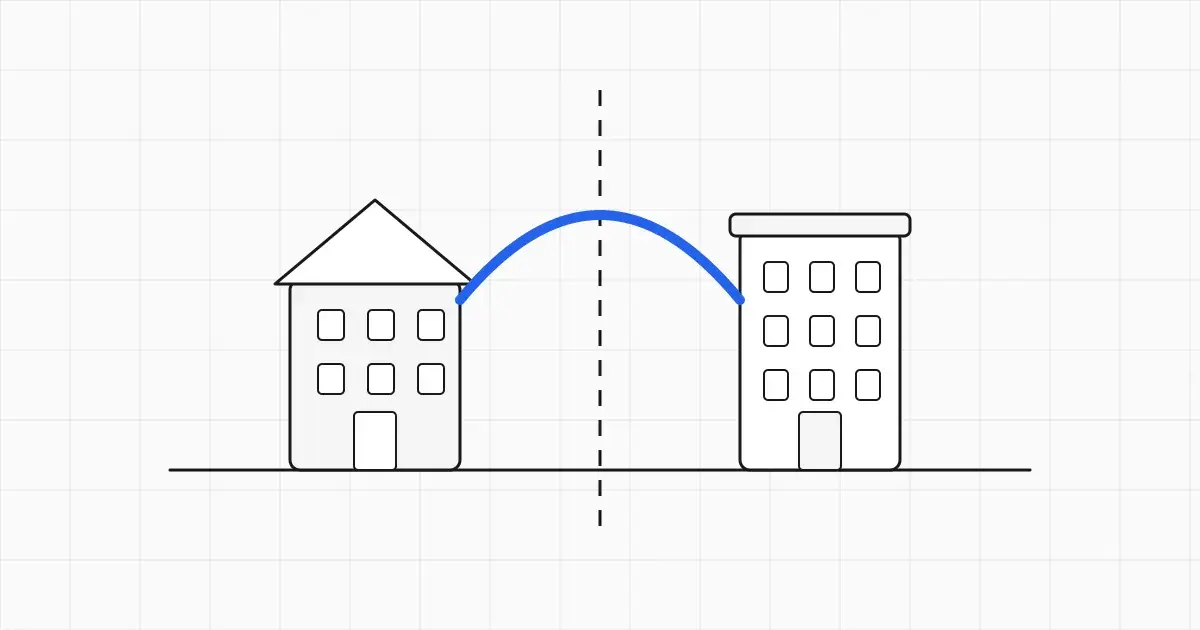
For most Canadian residents, a US LLC is the wrong default. The IRS treats a single-member LLC as a “disregarded entity” (its profit is taxed on you), while the Canada Revenue Agency treats the same LLC as a foreign corporation. That mismatch can deny you treaty relief, strand your US tax credits and tax the same dollars twice. A Canadian corporation, a sole proprietorship or a US C-corp is usually cleaner.
This guide explains the hybrid problem in plain English, walks through a worked example, and compares the alternatives. Rules checked 28 Oct 2026 (T1134 deadline and penalties re-checked 29 Oct 2026) against CRA, Finance Canada and IRS pages.
This is general information, not tax or legal advice. Confirm with a CPA (US) and a Canadian CPA or cross-border tax advisor for your situation.
Why a US LLC is a “hybrid” for Canadians
Two tax systems look at the same entity and see different things.
The US view. Per the IRS, an LLC with one member is “treated as an entity disregarded as separate from its owner” for income tax, unless it files Form 8832 to be taxed as a corporation. A multi-member LLC defaults to a partnership. Either way, US tax lands on the members, not the LLC.
The Canadian view. The CRA has said for decades that a Delaware LLC is “considered a corporation for all purposes of the Act” (CRA TI 2010-0369311E5). A 2002 CRA letter listed LLC statutes in Delaware, Wyoming, Florida, New York, Texas and other states as producing corporations (2001-0085845). By 2018 the CRA described it as “widely accepted that US LLCs are properly viewed as corporations” (2018-0744121C6).
So in the US you are taxed on the LLC’s profit as it’s earned. In Canada the profit belongs to a foreign corporation you own, and you are taxed when it pays you, or earlier if the income is passive.
| Question | IRS view (single-member LLC) | CRA view |
|---|---|---|
| What is the LLC? | Disregarded entity (default) | Corporation |
| Who is taxed on profit? | You, as the owner, when earned | The LLC; you are taxed on distributions (dividends) |
| Who “paid” the US tax? | You | You, not the LLC, which matters for credits |
| Losses | Flow to you | Stay inside the LLC (2010-0369311E5) |
| Foreign affiliate filing | Not applicable | Form T1134 if it is your foreign affiliate |
The treaty problem: Article IV(7)(a)
The Canada-US tax treaty normally protects a Canadian resident from US tax on business profits unless they have a US permanent establishment. Article VII(1) says business profits of a resident of one country “shall be taxable only in that State unless the resident carries on business in the other Contracting State through a permanent establishment” (treaty text).
The Fifth Protocol added an anti-hybrid rule. Article IV(7)(a) says an amount is “considered not to be paid to or derived by” a resident of one country where that person is considered under the other country’s law to have derived it through an entity that is not resident in the first country, and, because the first country does not treat that entity as fiscally transparent, the amount is treated differently than if the person had earned it directly.
Map that onto a Canadian with a US LLC:
- The US says you derived the income through the LLC.
- Canada does not treat the LLC as fiscally transparent (it is a corporation).
- So Canada’s treatment differs from what it would be if you earned the income directly.
- Result: the treaty treats the income as not derived by a Canadian resident, so you generally can’t lean on treaty protections for it, including the Article VII permanent-establishment shield and reduced withholding rates.
The mirror rule, Article IV(6), helps US-resident members of fiscally transparent entities claim treaty benefits. It does nothing for a Canadian member of a US LLC.
What TD Securities actually decided
The TD Securities case is often cited as “LLCs get treaty benefits,” which is only half true. In TD Securities (USA) LLC v. The Queen, 2010 TCC 186, the Tax Court held that a Delaware LLC wholly owned by a US corporation was a US resident under the treaty as it stood before the Fifth Protocol. In response, the CRA said it “continues to be of the view that an LLC that is fiscally transparent under the taxation laws of the United States is not a resident of the United States,” offered limited relief for pre-protocol years, and said that for later years Article IV(6) “establishes the parameters” for LLC treaty claims, available only where the income is derived by a US resident (CRA 2010-0369271C6).
The case concerned a US-owned LLC earning Canadian income. It does not rescue a Canadian-owned LLC earning US income.
Where the double tax comes from
The risk is a mismatch of who pays and when.
- US tax is paid by you, on profit as it is earned. For Canadian purposes, that tax was paid by you, not by the LLC.
- Canada taxes you later, when the LLC distributes. The CRA sees a dividend from a foreign corporation.
- Credits don’t line up. The CRA folio says a foreign tax credit requires foreign tax “paid… for the year” (¶1.32), and unused non-business foreign tax credit “cannot be carried over and claimed as a foreign tax credit for another year” (¶1.24) (S5-F2-C1). If US tax is paid in year one and the Canadian dividend arrives in year two, the timing breaks.
The folio also notes that US tax paid by a shareholder on a flow-through entity’s business does not qualify as business-income tax “because the business was not carried on by the person who paid the tax” (¶1.27, describing S corporations). Where a credit can’t be used, subsection 20(12) offers a deduction instead (¶1.24), which is worth far less than a dollar-for-dollar credit.
Passive income is worse. The CRA has noted that a US LLC owned by a Canadian individual “would be considered a controlled foreign affiliate,” so foreign accrual property income (FAPI) may be taxed in Canada every year as it accrues (2010-0369311E5). A US LLC holding investments or earning mostly passive income is the most exposed.
Worked example (illustrative numbers only)
The rates below are placeholders to show the mechanics, not actual US or Canadian rates. Your real numbers depend on the province, the type of income and the US filing position.
Setup. Maya lives in Ontario and owns 100% of a Delaware LLC. It earns US$100,000 of profit in Year 1 that is taxable in the US. She leaves it in the LLC and distributes US$80,000 in Year 2.
| Step | Year 1 | Year 2 |
|---|---|---|
| US tax paid by Maya on LLC profit (assume 20%) | US$20,000 | US$0 (assume no further US tax on the payout) |
| Canadian income for Maya | US$0 (active profit of a foreign corporation isn’t her income yet) | US$80,000 foreign dividend |
| Canadian tax before credits (assume 40% marginal) | US$0 | US$32,000 |
| Foreign tax credit available | None used: no Canadian tax to offset | At risk: the US tax was paid “for” Year 1, and non-business credits don’t carry over |
| Total tax on US$100,000 | US$20,000 + US$32,000 = US$52,000 (52%) |
Had Maya earned the same profit as a sole proprietor, Canada would tax US$100,000 in Year 1 and she would claim the US$20,000 against it in the same year. With a 40% rate, total tax would be US$40,000, not US$52,000. The US$12,000 gap is the hybrid penalty in this simplified case, before compliance fees.
The CRA has addressed variations of this in technical interpretations, and some fact patterns can be partly relieved. Treat any relief as fact-specific, not something to plan around.
Filing obligations on both sides
US side. A foreign-owned single-member LLC files a pro forma Form 1120 with Form 5472 for each year with reportable transactions, and owner contributions and distributions count. The penalty for missing it is US$25,000 (IRS i5472). See our Form 5472 guide for the filing steps.
Canadian side. Because the CRA sees the LLC as a non-resident corporation, it can be your foreign affiliate. Per the T1134 instructions, a Canadian resident with a foreign affiliate files Form T1134 annually, due 10 months after the end of your tax year (for years beginning in 2021 and later). You skip the full supplement only for a “dormant or inactive” affiliate: total cost under CAN$100,000, gross receipts under CAN$100,000 in the year, and assets never above CAN$1,000,000. You still report base information for it. For a calendar-year individual, the return for the 2025 tax year is due October 31, 2026 (a Saturday; the CRA treats returns received or postmarked by the next business day as on time), and the 2026 return is due October 31, 2027. Filing late costs $25 a day for up to 100 days (minimum $100, maximum CAN$2,500), rising to $500 a month for up to 24 months (maximum $12,000) if the failure is knowing or grossly negligent (CRA penalties). Shares of a foreign affiliate are excluded from Form T1135, so the LLC itself goes on T1134, not T1135. Our T1134 guide for US LLC owners walks through the filing step by step.
State side. A Delaware LLC costs US$110 to form and US$400 a year in LLC tax, due June 1 (Delaware fee schedule). Compare states in Delaware vs Wyoming LLC.
Alternatives to a US LLC for Canadians
| Structure | Canada sees | US sees | Main upside | Who should NOT use it |
|---|---|---|---|---|
| Canadian sole proprietorship | You | You (if US tax applies) | Simplest; US tax and Canadian tax hit the same person in the same year | Founders who need liability protection or outside investors |
| Canadian corporation | Canadian corporation | Foreign corporation | One clear residence; treaty access as a Canadian resident; most Canadian advisors know it | Startups that must raise from US VCs that require a US parent |
| US C-corp (e.g. Delaware) | Foreign corporation (foreign affiliate) | US corporation | Both countries agree it is a corporation; the standard VC vehicle | Solo service businesses with no US investors (two corporate tax layers plus T1134) |
| US LLC that elects corporate tax (Form 8832) | Corporation | Corporation | Removes the “who paid the tax” mismatch; CRA says it may then qualify as a US treaty resident | Anyone who hasn’t modelled it with an advisor; it is a C-corp with extra paperwork |
| US limited partnership | Often a partnership (CRA has treated Delaware partnerships as partnerships) | Partnership | Both sides may see flow-through | Solo founders; needs two partners and specialist drafting |
| Default US LLC | Corporation | Disregarded or partnership | Easy US banking and payments | Most Canadian residents, especially with passive income |
A few notes on the table:
- US C-corp. Both countries agree it is a corporation, so there’s no hybrid. A Delaware corporation starts at US$109 to incorporate, with franchise tax and an annual report due March 1 (minimum tax US$175 or US$400 depending on method, plus a US$50 report fee) (Delaware fees). See Delaware C-corp vs LLC for startups.
- Check-the-box LLC. The CRA said a Form 8832 election “would not alter the US LLC’s classification as a corporation for Canadian tax purposes,” but because the LLC then pays US tax itself, it “may qualify as a ‘resident’ of the US” under the treaty, and foreign tax credit results can differ (2018-0744121C6). The IRS says an election generally can’t take effect more than 75 days before it is filed (IRS).
- US limited partnership. A 2002 CRA letter excluded partnerships formed under Delaware’s partnership statute from its “LLC = corporation” list and treated them as partnerships (2001-0085845). It’s an older letter, so confirm the current position for your exact entity.
Who should and shouldn’t form a US LLC as a Canadian
A US LLC can make sense if:
- You are a US citizen living in Canada and your advisor has modelled both returns.
- You will make the Form 8832 corporate election from day one, with advice.
- You hold US real estate or another asset where your advisor specifically recommends it.
Skip the default US LLC if:
- You are a Canadian-resident freelancer or SaaS founder who mainly wants Stripe, a US bank account or US clients. A Canadian entity can usually get those, and the hybrid tax cost can outweigh the convenience.
- The LLC will earn passive income (FAPI exposure every year).
- You plan to raise venture capital; investors generally expect a C-corp.
- You don’t want two countries’ annual filings (Form 5472 plus T1134).
Quick decision path
- Raising from US investors? Look at a US C-corp, and possibly a Canadian holding structure above it.
- Solo, service or SaaS, no investors? Start with a Canadian sole proprietorship or Canadian corporation.
- Already have a US LLC? Don’t panic or dissolve it on impulse. Ask a cross-border advisor to compare a Form 8832 election, a conversion, or a wind-down, and check your T1134 and Form 5472 filing history.
For the general non-resident view (where an LLC often is the right answer for people in countries without this mismatch), see US LLC for non-residents. More guides are in the US company setup hub.
Frequently asked questions
Should a Canadian form a US LLC?
How does the CRA treat a US LLC?
Can a Canadian member of a US LLC use the Canada-US tax treaty?
Didn't the TD Securities case say LLCs get treaty benefits?
Do I have to file T1134 for my US LLC?
Can a US LLC elect to be taxed as a corporation to fix the problem?
Sources
- 1. Canada-US Tax Convention, consolidated text (Articles IV and VII) - Department of Finance Canada canada.ca
- 2. Income Tax Folio S5-F2-C1, Foreign Tax Credit - CRA canada.ca
- 3. Form T1134, Information Return Relating to Controlled and Non-Controlled Foreign Affiliates - CRA canada.ca
- 4. Penalties for foreign reporting forms (T1134, T1135) - CRA canada.ca
- 5. CRA technical interpretation 2010-0369311E5: Transactions with a Delaware LLC taxinterpretations.com
- 6. CRA 2010 roundtable 2010-0369271C6: Treatment of LLCs after TD Securities taxinterpretations.com
- 7. CRA 2018 STEP roundtable 2018-0744121C6: Impact of a check-the-box election taxinterpretations.com
- 8. CRA technical interpretation 2001-0085845: LLCs considered corporations, by state taxinterpretations.com
- 9. Limited liability company (LLC) classification - IRS irs.gov
- 10. Instructions for Form 5472 - IRS irs.gov
- 11. Delaware Division of Corporations fee schedule (August 2026) corpfiles.delaware.gov
Founder, unboxth
Saksham Dogra is the founder of unboxth. He writes founder to founder about building an AI startup from anywhere: company setup, costs, tools and fundraising.