BOI Reporting 2026: US Companies No Longer Have to File
If your LLC or C-corp was formed in the US, you are done with BOI: FinCEN made the exemption permanent in August 2026. Letters asking you to pay to file are scams.
Saksham Dogra 9 min read
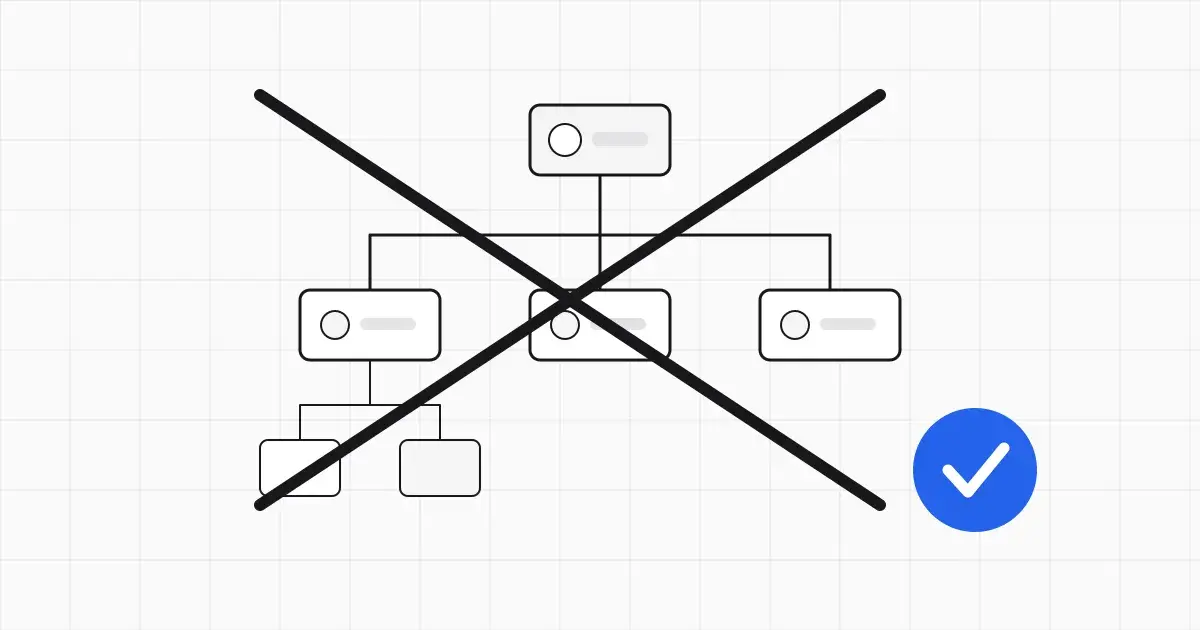
No. If your company was formed in the United States, BOI reporting is no longer required in 2026. FinCEN issued a final rule on 11 August 2026, effective 14 August 2026, that permanently exempts all US-formed companies from beneficial ownership information (BOI) reporting. The only companies that still file are certain companies formed under foreign law that have registered to do business in a US state, and even they leave out US-person owners (FinCEN).
That one change makes a lot of 2024 and early-2025 advice wrong. This guide covers what the rule changed, who still files (including Canadian and Australian companies registered in a US state), the scam letters still circulating, and what to ignore in older guides. Facts checked against fincen.gov on 28 October 2026.
This is general information, not tax or legal advice. Confirm with a CPA or US attorney for your situation.
What the FinCEN final rule changed
BOI reporting comes from the Corporate Transparency Act. As first rolled out, it asked most small US companies to tell FinCEN who owned and controlled them. That is why so many LLC owners, including non-residents with a single Delaware or Wyoming LLC, were told to file.
The rules then changed in two steps:
| Date | What happened | Status today |
|---|---|---|
| 26 March 2025 | FinCEN published an interim final rule redefining “reporting company” as only entities formed under foreign law and registered to do business in a US state or tribal jurisdiction | Replaced by the final rule |
| 11 August 2026 | FinCEN issued its final rule making those exemptions permanent and expanding relief for US persons | In force |
| 14 August 2026 | Final rule took effect | Current law |
Source: FinCEN BOI page, checked 28 October 2026.
Under the final rule, FinCEN lists four points:
- US companies are exempt and no longer have to file BOI reports.
- Reporting companies do not report US persons, whether as beneficial owners or as company applicants.
- US persons do not have to provide BOI to reporting companies they own or helped form.
- US persons with a FinCEN ID do not have to update or correct what they submitted before.
The US Treasury’s announcement of the final rule adds that FinCEN will delete the BOI it holds on US persons (Treasury).
What “US company” means here
The exemption is about where the entity was created, not where its owners live. FinCEN’s wording is “all entities created in the United States”, including those it used to call “domestic reporting companies” (FinCEN). So:
- A Delaware LLC owned by a founder in Toronto is a US company. Exempt.
- A Wyoming LLC owned by a founder in Melbourne is a US company. Exempt.
- A Delaware C-corp with Canadian and Australian co-founders is a US company. Exempt.
The nationality or residence of the owners does not bring a US-formed company back into BOI reporting.
Who still has to file BOI in 2026
FinCEN now defines a “reporting company” as an entity formed under the law of a foreign country that has registered to do business in a US state or tribal jurisdiction by filing a document with a secretary of state or a similar office. Those entities file unless they qualify for one of the exemptions in the rules (FinCEN).
The Canadian and Australian example
Think about how a cross-border founder actually expands into the US. There are two common routes, and they land on opposite sides of the rule.
| Your setup | Formed under | Registered in a US state? | Files BOI? |
|---|---|---|---|
| You live in Canada and formed a Delaware LLC through a formation service | Delaware law | It is a Delaware entity | No |
| You live in Australia and formed a Wyoming LLC | Wyoming law | It is a Wyoming entity | No |
| Your Ontario corporation registered (foreign-qualified) in New York to open a US office | Canadian law | Yes, as a foreign entity | Likely yes, unless an exemption applies |
| Your Australian Pty Ltd registered with the California Secretary of State to hire there | Australian law | Yes, as a foreign entity | Likely yes, unless an exemption applies |
| Your Canadian corporation sells to US customers online but never registered in any US state | Canadian law | No | No, under the current definition |
The trigger is the registration filing. Selling into the US, or having US customers, does not by itself make a foreign company a reporting company under FinCEN’s definition. Registering with a secretary of state does.
What a foreign reporting company reports
A foreign company that is a reporting company reports its beneficial owners and company applicants who are not US persons. If your Canadian corporation is owned by two Canadians and one US citizen, only the two Canadians go in the report. US persons are exempt from providing their information (FinCEN).
The deadline for foreign companies
FinCEN’s page still carries the deadline wording from the interim rule: a foreign reporting company that registered to do business in the US on or after 26 March 2025 has 30 calendar days to file its initial report after receiving notice that its registration is effective. Companies registered before 26 March 2025 had until 25 April 2025 (FinCEN). FinCEN also notes parts of its site are not fully updated, so check the final rule text for the exact current deadline before relying on it.
Filing is done directly through FinCEN’s BOI E-Filing System, and there is no fee to file with FinCEN.
A worked example: one founder, two structures
Priya lives in Vancouver. She has a Canadian corporation and is weighing two ways to sell into the US in 2027.
Option A: a new Delaware LLC owned by her Canadian corporation. The LLC is created under Delaware law, so it is a US company and files no BOI. Her compliance list instead includes the Delaware LLC tax of $400 a year due 1 June (Delaware) and the IRS filings that apply to a foreign-owned US entity. If the LLC is a foreign-owned disregarded entity, that means a pro forma Form 1120 plus Form 5472 each year (IRS).
Option B: register the Canadian corporation itself in Washington State. The corporation is formed under Canadian law and has filed with a US secretary of state, so it fits FinCEN’s reporting-company definition. Unless an exemption applies, it files a BOI report within 30 calendar days of the registration becoming effective, listing Priya (a non-US person) as a beneficial owner.
BOI should not decide this choice. Tax, liability and banking matter much more. But it is a real difference in paperwork, and it is the opposite of what many founders assume: the US-formed entity is the one with no BOI duty.
BOI scam letters: what FinCEN says to watch for
Scammers kept using BOI after the rules changed, because many owners still believe a filing is due. FinCEN’s BOI page lists these red flags (FinCEN):
- “Form 4022” or “Form 5102”. FinCEN has no such forms. Any letter that asks you to fill one in is fraudulent.
- “US Business Regulations Dept.” There is no government agency by that name.
- A request for payment. There is no fee to file BOI directly with FinCEN, and FinCEN does not send letters asking for payment to file.
- A link or QR code that you are asked to click or scan.
- Penalty notices by email or phone. FinCEN does not send first contact about Corporate Transparency Act penalties by email or over the phone.
FinCEN also issued a public alert on these schemes on 18 December 2024, linked from the same page.
Non-resident owners are an easy target here. Formation services publish your company’s mailing address, the state records show your company name and formation date, and a professional-looking letter arriving at your registered agent can look official from abroad. If your company is US-formed, you can treat any BOI demand as suspect by default.
Paid “BOI filing” add-ons
Some formation and compliance services sold BOI filing as an add-on in 2024 and 2025. If you are on an annual plan that still lists BOI filing for a US-formed company, ask the provider what it now does for that fee. For a US company there is nothing to file.
What to ignore in old BOI guides
FinCEN itself tells readers to disregard any guidance on its own site saying that (FinCEN):
- US companies or their beneficial owners must report BOI
- BOI must be reported for US persons
- US persons must update or correct FinCEN ID information
- BOI reports were due before 25 April 2025
On third-party sites, also skip:
- “File by 1 January 2025 or face daily fines.” That deadline belongs to the original rollout and no longer applies to US companies.
- “Every new LLC must file within 90 days (or 30 days) of formation.” That was the old rule for domestic companies. US-formed companies now have no filing.
- Checklists that pair BOI with Form 5472 as if they were one obligation. They were always separate: one went to FinCEN, the other goes to the IRS.
- Penalty figures for US companies. FinCEN said in 2025 it would not enforce BOI penalties against US citizens or domestic reporting companies, and the final rule removed the obligation.
If a guide was last updated before August 2026 and talks about BOI for US LLCs, assume that part is out of date.
What still applies to foreign-owned US companies
Dropping BOI did not remove the filings that actually carry big penalties for non-resident founders. If you are a Canadian or Australian owner of a single-member US LLC, the IRS treats it as a foreign-owned disregarded entity, and it must file a pro forma Form 1120 with Form 5472 each year. It cannot be e-filed; it goes by fax or mail (IRS).
| Filing | Agency | Applies to a foreign-owned single-member US LLC? | Cost or penalty |
|---|---|---|---|
| BOI report | FinCEN | No, exempt since 14 Aug 2026 | Not applicable |
| Form 5472 + pro forma 1120 | IRS | Yes, every year | $25,000 per form, plus $25,000 per 30 days if still unfiled 90 days after an IRS notice |
| Delaware LLC tax | Delaware | Yes, if a Delaware LLC | $400 a year; late: $200 penalty plus 1.5% a month |
| Wyoming annual report | Wyoming | Yes, if a Wyoming LLC | License tax: greater of $60 or $0.0002 per dollar of Wyoming assets |
Sources: IRS penalties, Delaware, Wyoming fee schedule, checked 28 October 2026.
The Form 5472 penalty is the one to plan around. For a tax year 2026 return, the pro forma 1120 and Form 5472 are due 15 April 2027, or 15 October 2027 with a Form 7004 extension (IRS). Our Form 5472 guide walks through it line by line.
Who should and shouldn’t worry about BOI now
You can stop thinking about BOI if:
- Your company was formed in any US state, whatever your citizenship or residence.
- You filed a BOI report in 2024 or 2025 for a US company. You do not need to update it.
- You are a US person who is an owner of a foreign reporting company. You are left out of its report.
You should check the rule if:
- Your company was formed outside the US (a Canadian corporation, an Australian Pty Ltd or similar) and it filed to register or qualify in any US state.
- You are planning that registration now. Diarize the 30-day window from the date the registration becomes effective, and confirm the current deadline in the final rule.
- You are a non-US person who owns or controls such a company, because your details go in its report.
For founders choosing between a new US entity and expanding their home company, see US LLC for Canadians and US company setup for Australian founders. If you are picking a formation service, our Stripe Atlas vs doola vs Firstbase comparison prices out three years of fees. More guides are in the US company setup hub.
Frequently asked questions
Is BOI reporting still required in 2026?
Do I need to file BOI for my LLC if I live in Canada or Australia?
Does a Canadian or Australian company doing business in the US have to file BOI?
I got a letter about Form 4022 asking me to pay a BOI fee. Is it real?
Should I delete or update the BOI report I already filed?
Do I still need to file Form 5472 now that BOI is gone?
Sources
- 1. FinCEN: Beneficial Ownership Information Reporting (final rule alert, updated 11 Aug 2026) fincen.gov
- 2. US Treasury press release on the BOI final rule home.treasury.gov
- 3. IRS: Employer identification number (EIN) page, FinCEN reporting note irs.gov
- 4. IRS: Instructions for Form 5472 irs.gov
- 5. IRS: International information reporting penalties irs.gov
- 6. IRS: Instructions for Form 1120 (due dates) irs.gov
- 7. Delaware: LLC annual tax instructions corp.delaware.gov
- 8. Wyoming Secretary of State: business fees sos.wyo.gov
Founder, unboxth
Saksham Dogra is the founder of unboxth. He writes founder to founder about building an AI startup from anywhere: company setup, costs, tools and fundraising.