Can a TN Visa Holder Start a Business? Not One They Control
TN is the easiest US work status a Canadian can get, and the worst one for a founder. The rule is one sentence in the federal regulations. Here is what it means for your startup.
Saksham Dogra 6 min read

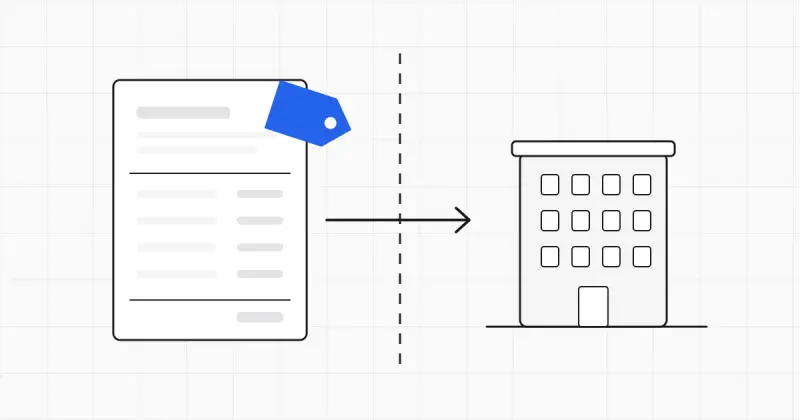
Yes, a Canadian on a TN can own a business, but TN status cannot be used to work for a company you solely own or control. The federal regulation says it in one line: TN “does not authorize the establishment of a business or practice in the United States in which the professional will be, in substance, self-employed.” That matters because the obvious founder move, forming a Delaware C-corp and having it hire you, is exactly what the rule blocks, and working without authorization can cost you a status that is otherwise renewable in up-to-three-year blocks.
This guide is for Canadian citizens in or heading to the US on a TN who want to start something. It is based on the regulation, the State Department’s Foreign Affairs Manual and USCIS, all read on 31 Oct 2026.
This is general information, not legal advice. Immigration outcomes turn on facts and on the officer in front of you. Talk to a US immigration lawyer before you incorporate, raise or quit.
What the TN rule actually says
TN is the USMCA professional category for citizens of Canada and Mexico. 8 CFR 214.6 defines the work it covers as “the performance of prearranged business activities for a United States entity, including an individual,” and then adds the founder clause:
“It does not authorize the establishment of a business or practice in the United States in which the professional will be, in substance, self-employed. A professional will be deemed to be self-employed if he or she will be rendering services to a corporation or entity of which the professional is the sole or controlling shareholder or owner.”
The State Department’s manual for consular officers, 9 FAM 402.17, repeats the rule and adds two points founders should note:
- The US employer must be “a bona fide entity in that it must not serve to disguise the applicant’s self-employment in the United States.” A shell that exists to employ you fails even if someone else technically holds the shares.
- If you want self-employment, you “should pursue that employment under another visa category, possibly to include the Treaty Trader (E-1) or Investor (E-2) visa classification.”
Two other TN facts shape the founder question. Admission is “for a period not to exceed three years” at a time, with extensions available (USCIS). And the job must be one of the professions listed in Appendix 2 of USMCA Annex 16-A, judged by the duties rather than the title: the FAM’s own example is a “computer system analyst” offer whose duties are really computer programming, which it says is not a listed profession.
What you can and can’t do on a TN
| Situation | TN position | Why |
|---|---|---|
| Your 100%-owned US company sponsors your TN | Not allowed | You’d render services to an entity you solely own: deemed self-employed |
| You work for an unrelated employer on TN and build your startup in the US after hours | Not authorized | TN covers only the TN employer’s job; other work in the US needs its own authorization |
| You and two co-founders split 34/33/33 and the company employs you on TN | Possible, scrutinized | Not sole or controlling on its face, but the entity must not disguise self-employment |
| Two co-founders at 50/50 | Gray zone | “Controlling” is not defined; voting rights and board control matter |
| You stay in Canada and run your US company from there | Not a TN question | US work authorization rules govern work performed in the US |
| You invest in a US company and come to develop and direct it | Wrong category | That is the E-2 Treaty Investor profile |
The second row is the one that catches people. 8 CFR 214.1(e) says a nonimmigrant who is permitted to work “may engage only in such employment as has been authorized,” and that “any unauthorized employment by a nonimmigrant constitutes a failure to maintain status.” Your TN authorizes the job in your TN paperwork. Shipping code for your own company from a Seattle apartment is not that job.
The FAM also closes a remote-work loophole from the other direction: a TN holder “would not be allowed to reside in the United States and telework to a location in a foreign country for the convenience of the employee.” TN is tied to the US employer, not to where you would like to live.
Worked example: Maya’s three options
Maya is a Canadian engineer working in Seattle on a TN for a US software company. She wants to start an AI developer-tools company.
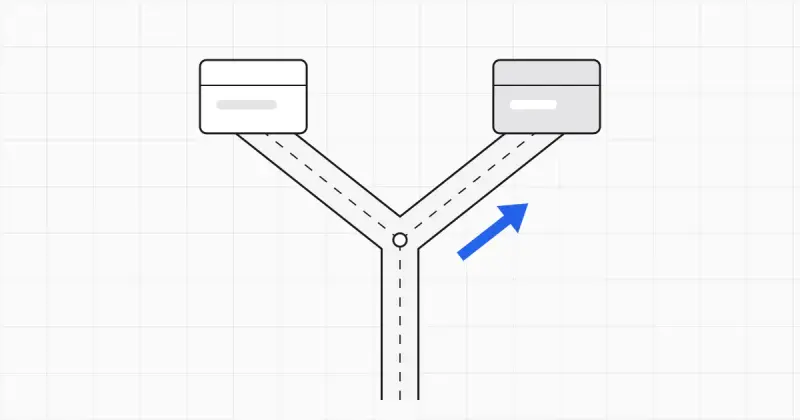
Option A: incorporate solo and build in Seattle. She forms a Delaware C-corp, owns 100%, and starts writing code for it in the evenings. Under 8 CFR 214.6 she would be rendering services to an entity of which she is the sole owner, which is self-employment TN doesn’t cover; under 214.1(e) that work is outside her authorized employment. Her new company also can’t sponsor a TN for her, for the same reason. This is the option to avoid.
Option B: three co-founders, company hires her. Maya and two US co-founders split equity 34/33/33 and raise a seed round, and the company wants to employ Maya on TN as an engineer. She is not the sole owner, and at 33% she is not the largest holder, so the “deemed self-employed” sentence doesn’t apply on its face. The officer can still ask whether the entity is bona fide and whether her duties fit a listed profession. If the split were 50/50 with Maya as CEO and a board seat, the “controlling” question becomes live, because the regulation gives no percentage.
Option C: E-2 Treaty Investor. Canada has been an E-1 and E-2 treaty country since January 1, 1994 (State Department treaty list). The E-2 requirements fit a founder: at least 50% of the US company owned by treaty nationals, an investment that is “substantial and sufficient to ensure the successful operation of the enterprise,” a “real and operating commercial enterprise,” and the investor coming “to develop and direct” it. The State Department adds that “uncommitted or revokable funds in a bank account” generally do not count, and that the business must generate more than a living for you and your family or have a significant economic impact. The visa application fee shown on that page is $315. There is no fixed minimum investment in the rule; how much is “substantial” is the conversation to have with a lawyer.
The difference between A and C is not paperwork; it is which category matches what Maya is actually doing.
What about Australian founders?
The TN is for Canadian and Mexican citizens only. The Australian equivalent for employment is the E-3, which the State Department describes as for Australian nationals in a “specialty occupation,” with an approved Labor Condition Application obtained by the US employer. Australia is also an E-1 and E-2 treaty country, with E-2 in force since December 27, 1991, so the treaty-investor route in Option C is available to Australian founders as well. If you are an Australian considering a US parent company, read the Delaware flip tax traps before you pick a structure.
A checklist before you start a company on a TN
- Don’t build it in the US yet. Until you hold a status that covers it, don’t do work for your own company while you are in the United States.
- Write down the cap table you actually plan. Sole owner, majority, 50/50, or minority changes the analysis. Voting rights and board control count, not just percentages.
- Check the job against the USMCA list. If your TN employer will be your own startup in the future, the duties must still fit a listed profession at a professional level.
- Price the E-2 path. Treaty-national ownership of at least 50%, committed investment, and an operating business. A lawyer can tell you what “substantial” means for your plan.
- Pick the entity with immigration in mind. Most venture-backed founders choose a Delaware C-corp; our C-corp vs LLC guide covers why. Canadians who stay home and use a US LLC instead face a different trap: Canada taxes a US LLC as a corporation and expects a T1134.
If you are applying to an accelerator such as Y Combinator from Canada, sort the status question before the batch, not during it. And if your company ends up billing US customers from Toronto instead, the GST side is in our guide to charging GST to US customers.
Frequently asked questions
Can a TN visa holder own a business?
Can my own US company sponsor my TN?
Can I work on my startup on nights and weekends while on a TN?
Is a 50/50 co-founder split 'controlling'?
What visa should a Canadian founder use instead?
Does this apply to Australians on an E-3?
Sources
- 1. 8 CFR 214.6, Citizens of Canada or Mexico seeking temporary entry under USMCA (eCFR) ecfr.gov
- 2. 8 CFR 214.1(e), Employment by nonimmigrants (eCFR) ecfr.gov
- 3. 9 FAM 402.17, USMCA Professionals: TN and TD Visas - U.S. Department of State fam.state.gov
- 4. TN USMCA Professionals - USCIS uscis.gov
- 5. Treaty Countries - U.S. Department of State travel.state.gov
- 6. Treaty Trader, Treaty Investor and Australians in Specialty Occupations (E visas) - U.S. Department of State travel.state.gov
Founder, unboxth
Saksham Dogra is the founder of unboxth. He writes founder to founder about building an AI startup from anywhere: company setup, costs, tools and fundraising.