Do I Charge GST to US Customers? Usually 0% in CA and AU
A Toronto or Sydney startup billing a US company normally charges 0% GST. You still may have to register, and you still claim back the GST you pay. Here is where the rule breaks.
Saksham Dogra 7 min read
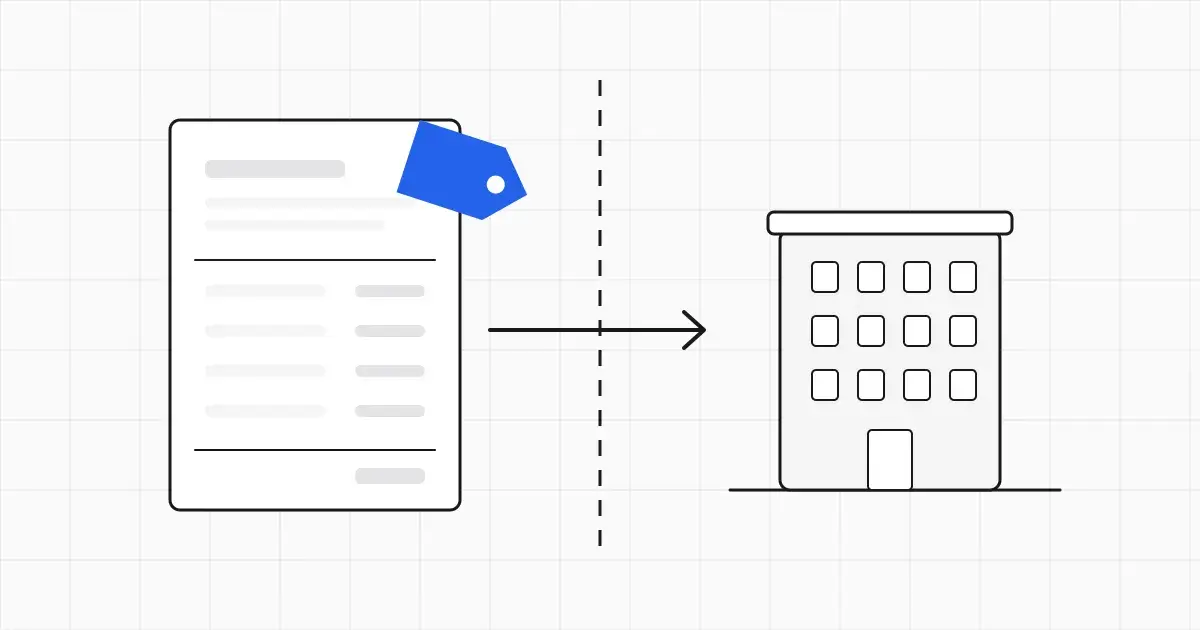
Usually no. If you are a Canadian or Australian startup selling services or software to a US business, you normally charge 0% GST on that invoice. Canada calls it zero-rated; Australia calls it GST-free. The money at stake is real: on a US$2,000-a-month contract, a Toronto company that wrongly adds Ontario’s 13% HST puts about C$4,356 a year on its customer’s bill that an unregistered US customer generally has no input tax credit to claim against.
Two things trip founders up. Zero-rated sales still count toward the registration thresholds, so you can be required to register even though you never charge anyone GST. And “0%” only holds if you can prove where the customer is. Rules below were checked against the CRA, the Excise Tax Act and the ATO on 31 Oct 2026.
This is general information, not tax advice. GST on cross-border services turns on facts; have an accountant confirm your setup before your first return.
The short answer, country by country
| Canada (GST/HST) | Australia (GST) | |
|---|---|---|
| Sale to a US business, no presence in your country | Zero-rated (0%) | GST-free (0%) |
| Name for it | Zero-rated supply | GST-free supply |
| Can you still claim tax on your costs? | Yes, input tax credits | Yes, GST credits |
| Registration threshold | C$30,000 over four consecutive quarters (or in one quarter) | A$75,000 GST turnover |
| Do 0% export sales count toward the threshold? | Yes, zero-rated supplies are included | Yes, if connected with Australia |
| Normal rate you are not charging | 5% GST, or 13% to 15% HST by province | 10% |
Canada: why most sales to US customers are zero-rated
The CRA’s GST/HST on imports and exports page says goods and services that are normally taxable “may not be subject to the GST/HST when exported from Canada,” in which case they are “zero-rated (taxed at 0%).” The legal list is in Schedule VI, Part V of the Excise Tax Act. Three sections cover almost every AI or software startup:
- Section 7, services. “A supply of a service made to a non-resident person” is zero-rated, with exclusions. The ones that matter to founders: a service to an individual who is in Canada when they deal with you, a service rendered to an individual while they are in Canada, services tied to real property or goods in Canada, and advisory, consulting or professional services (which have their own section).
- Section 23, advisory, professional and consulting services. Zero-rated when made to a non-resident, except for Canadian litigation work, services tied to property in Canada, and acting as the non-resident’s agent. Dev shops and AI consultancies billing US clients usually land here.
- Section 10.1, intangible personal property. A supply of intangible personal property to a non-resident “who is not registered” for GST/HST is zero-rated, unless it goes to an individual who is in Canada at the time, relates to property or taxable services in Canada, or “may only be used in Canada.” A software licence or API access can fall here rather than under services.
You do not have to win the service-versus-property argument to get to 0%. Both routes zero-rate a sale to an unregistered US company with no Canadian presence. The CRA even lists “services made in Canada and provided to a non-resident person by electronic means” as an example of a zero-rated service.
Where the 0% stops
- The customer is GST/HST-registered in Canada. Section 10.1 only covers unregistered non-residents. If a large US customer has a Canadian GST/HST number, check before you assume 0%.
- You sell to individuals who are in Canada. A US citizen using your app from a Toronto apartment is not an export.
- You do the work on something located in Canada, such as onsite services at the customer’s Canadian office.
- Quebec. The QST (9.975%) is a separate provincial tax with its own rules; this guide covers only GST/HST.
The evidence rule
For intangible property, the CRA says suppliers “must verify and maintain satisfactory evidence of the GST/HST registration status and the residency of their customers at the time the supply is made,” plus the customer’s physical location for supplies other than intellectual property. In practice: keep the signed contract with the US address, the billing address and payment country from Stripe, and a note confirming the customer is not GST/HST-registered.
Australia: when a sale to a US customer is GST-free
The ATO’s Exports and GST page puts it plainly: exports of goods and services “are generally GST-free.” For services, the supply is GST-free if it is “used or enjoyed outside Australia or the supply is made to a non-resident who is not in Australia when the supply is made.”
The ATO’s own example matches a typical founder: an Australian freelance writer, registered for GST, writes a chapter in Australia for a publisher in England and “does not include GST in his invoice.” Doing the work in Sydney does not make it taxable; who receives it, and where, decides.
Where GST-free stops
- The service is provided in Australia. The ATO’s counter-example is a school teaching overseas students in Australia while billing their parents abroad: not GST-free, because the service is delivered in Australia. For a startup, think of onsite workshops for a US client’s Sydney team.
- You can’t show where the customer is. In the ATO’s social media example, a creator who can’t obtain each subscriber’s location is told that “all her sales will be taxable.” The same logic applies to self-serve SaaS sign-ups: capture billing country and keep it.
Zero-rated still counts toward the thresholds
This is the part most guides skip.
Canada. You must register once you stop being a small supplier, meaning taxable supplies over C$30,000 in a single calendar quarter or over four consecutive quarters. The CRA’s registration page says to count “worldwide taxable supplies,” explicitly “including zero-rated supplies.” So a startup that sells only to US companies can still be required to register.
Australia. You must register when GST turnover reaches A$75,000 (current month plus the previous 11, or projected for the next 12), and within 21 days of crossing it, per the ATO’s Registering for GST page. The exports page adds that you “need to include export sales connected with Australia, even though they are GST-free.”
Registering is usually good news for an exporter. Because the sales are 0% rather than exempt, you can claim back the GST or HST you paid on Canadian or Australian costs: accountants, local software subscriptions, coworking. With no GST collected to offset, those credits often turn into a refund.
Worked example: the same US$2,000 contract in Toronto and Sydney
Exchange rates are the official rates for 30 October 2026: US$1 = C$1.3960 (Bank of Canada) and A$1 = US$0.7040 (RBA table F11).
Toronto. An Ontario corporation sells a US$2,000-a-month API plan to a Delaware company with no Canadian presence that isn’t registered for GST/HST.
- Monthly revenue: 2,000 × 1.3960 = C$2,792; quarterly C$8,376; annual C$33,504.
- GST/HST on the invoice: C$0 (zero-rated).
- If it wrongly charged 13% HST: C$362.96 a month, C$4,355.52 a year, which an unregistered US customer has no input tax credit to offset.
- Threshold: the running total passes C$30,000 in the fourth quarter (C$8,376 × 4 = C$33,504), so the company stops being a small supplier and must register, even though every sale is 0%.
- Upside: if it pays C$1,000 a month plus 13% HST on Ontario costs, it claims about C$1,560 a year back in input tax credits.
Sydney. An Australian company sells the same US$2,000-a-month plan to the same Delaware customer.
- Monthly revenue: 2,000 ÷ 0.7040 = A$2,840.91; annual A$34,090.91.
- GST on the invoice: A$0 (GST-free).
- Threshold: A$34,090.91 is under A$75,000, so registration is optional at this size.
- At US$5,000 a month (A$7,102.27 a month, A$85,227.27 a year), the company must register within 21 days of crossing A$75,000. It still invoices the US customer at 0%. Wrongly adding 10% would be A$8,522.73 a year on the customer’s bill.
A 4-step setup for invoicing US customers
- Classify each revenue line. Subscription or licence, consulting, onsite work. Onsite work in Canada or Australia, or sales to individuals located there, need separate treatment.
- Collect proof at signup. Legal entity name, US address, billing country, and (Canada) confirmation the customer isn’t GST/HST-registered. Store it with the contract.
- Track the threshold monthly, including 0% sales. Canada: rolling four quarters against C$30,000. Australia: rolling 12 months against A$75,000.
- Show the 0% on the invoice and in your books. Once registered, report the sales as zero-rated or GST-free and claim credits on your local costs.
What this does not settle
- US sales tax. That is decided state by state in the US. Charging 0% Canadian or Australian GST has no bearing on whether a US state expects you to collect its sales tax.
- Selling to consumers at home. Sales to customers in Canada or Australia are taxable as usual.
- Your US entity. If you invoice through a US LLC or C-corp instead, the home-country GST question changes. Canadians with a US LLC should read why the CRA treats it as a corporation and the T1134 filing; Australians weighing a US parent should read the Delaware flip tax traps.
If a US customer’s accounts team asks for a tax form while you are setting this up, you sign a W-8BEN-E, not a W-8BEN, for your Canadian or Australian company. And if you are pricing AI tools that bill you in USD, our Google Workspace guide shows how local GST lands on the other side of the ledger.
Frequently asked questions
Do I charge GST to US customers from Canada?
Do I charge GST to overseas customers in Australia?
Is SaaS sold to a US company zero-rated in Canada?
Do I need to register for GST if all my customers are in the US?
What's the difference between zero-rated and exempt?
Do I charge US sales tax instead?
Sources
- 1. GST/HST on imports and exports - Canada Revenue Agency canada.ca
- 2. Excise Tax Act, Schedule VI (Zero-Rated Supplies), Part V Exports - Justice Laws laws-lois.justice.gc.ca
- 3. When to register for and start charging the GST/HST - Canada Revenue Agency canada.ca
- 4. GST/HST calculator and rates - Canada Revenue Agency canada.ca
- 5. Exports and GST - Australian Taxation Office ato.gov.au
- 6. Registering for GST - Australian Taxation Office ato.gov.au
- 7. Bank of Canada USD/CAD daily exchange rate (Valet API) bankofcanada.ca
- 8. Reserve Bank of Australia exchange rates, table F11.1 (CSV) rba.gov.au
Founder, unboxth
Saksham Dogra is the founder of unboxth. He writes founder to founder about building an AI startup from anywhere: company setup, costs, tools and fundraising.